Corporation S CorpThe federal calendar beside the acceptance
The federal return still has its own dates after the status is settled.
Start with the date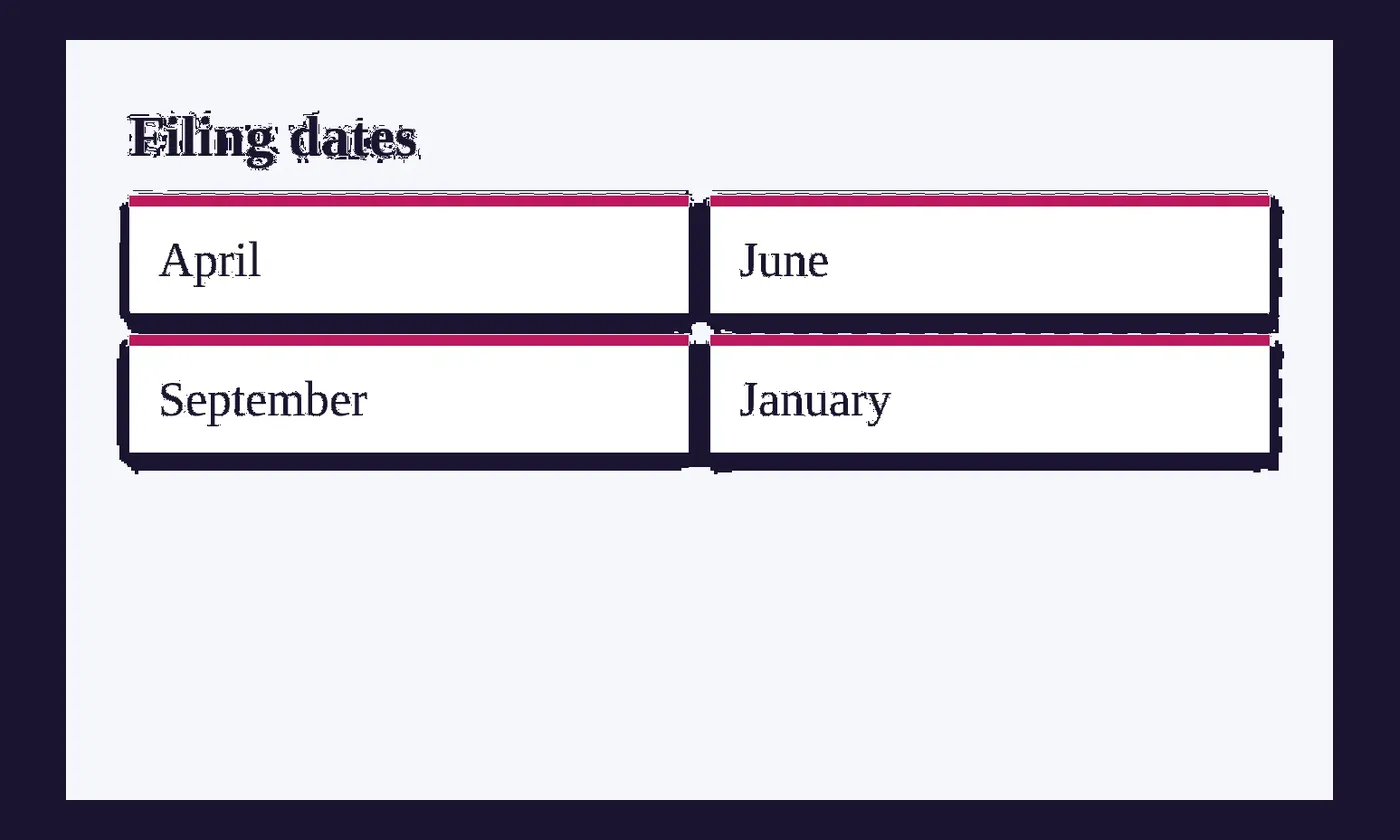
The federal return still has its own dates after the status is settled.
Start with the dateForm 1120-S is the federal return once an S election is accepted. It is not a copy of a software menu, and it does not switch on because someone clicked S. LLCs that elected, including a single member LLC and a series LLC that qualified and was accepted, file the form the acceptance supports. A corporation with no election stays on Form 1120. The status changes the federal forms. It does not retire the calendar.
Owners who arrived from a state that taxed them personally sometimes think a quiet personal draft means the company year is quiet too. A missing K-1 is not a finished year. The federal return is the piece that remains, and it reads the company's closed months with its own rules.
The federal computation starts from the months already closed. A second set of books built only for a draft form is how the filing and the month drift.
Form 1120-S instructions put a calendar year S return on the 15th day of the third month. Form 1120 instructions put a calendar year C return on the 15th day of the fourth month. Estimated payments that owners make on passthrough income commonly fall on the 15th of April, June, September, and January. If the instructions change a date, the page you are reading should change with them, and a memory of an older proverb should not be used in the meantime.
We do not invent a rate or a due date the instructions did not name. If your year is fiscal, the form's own instructions start the clock on the morning that year opens. We follow those instructions inside an engagement. This page will not compress them into one March slogan for every company.
A state's formation fee is a different number, and it lives on that state's instructions. That fee is a state charge. That fee is not the filing date of Form 1120-S. People stack the two because both involve paper. They are different offices and different years of the company's life.
Estimates are the other spring dates, and they are not the same as the return. An owner who owes on passthrough income often pays on the 15th of April, June, September, and January. The company return does not file those estimates for you. Equipment on the depreciation schedule still belongs in the books that feed the return. The asset list stays in the books. The return reads that list. It does not rebuild the list on the night the form is due.
What a year owes stays off a page anyone can read. The closed trial balance is yours. Our role, if you engage us, is to make sure the return matches the depreciation schedule and the wage reports so the IRS and the ledger are not strangers.
April is busy for a reason that has nothing to do with weather. Treat the crowding of dates as a reason to finish the return early. Leave enough days that a missing statement is not the reason the filing is late. The instructions stay the source. A proverb about the middle of March does not.
If the acceptance is missing, the federal return still exists. We do not delay the filing while we hunt a letter, and we do not pretend the letter changed the form. The status we can defend is the status the return should describe. If the federal side is still in doubt, the doubt is disclosed. It is not papered over with a menu label.
Payroll setup does not change the due date. The provider you run handles payday. The return handles the federal computation. We keep those lanes apart so a wage argument in March does not swallow the filing.
Circle the 15th day of the third month when the acceptance says S and the year is a calendar year, and circle the 15th day of the fourth month when the company is still a C. Then bring the certificate, the acceptance if you have it, and the closed months. The form under this card can carry the year and whether the months are closed.
A year with no tax due on a draft is still a filing year. Landing on a small number still means the return gets prepared. The number is a computation, and the computation needs the closed months. Owners who wait to see whether they owe often discover the books were not closed enough to know. Close first. Then measure. Bring the closed trial balance when you do.
Owners already fence off the weeks when the return and the estimates land on top of each other. We give that pair the same respect and we circle the date early. A crowded April is a calendar problem. It should not be the reason the filing waits for the last clear afternoon.